Mastering the Art of Cyclist Mountain Biking on Rugged Trail Landscapes
The allure of mountain biking lies not merely in the physical exertion but in the profound connection between rider and terrain. When we speak of a cyclist mountain biking on rugged trail environments, we are describing a dynamic interplay of skill, equipment, and natural obstacles that defines the sport at its most authentic level. Unlike paved road cycling, where consistency and aerodynamics reign supreme, off-road riding demands adaptability, quick decision-making, and a deep respect for the unpredictable nature of the earth beneath the tires. This form of cycling transforms a simple commute or workout into an immersive adventure, challenging riders to navigate roots, rocks, steep gradients, and loose soil with precision and confidence.
For professionals, hobbyists, and creators alike, understanding the nuances of this discipline offers valuable insights into human performance, engineering design, and even visual storytelling. The imagery associated with mountain biking—particularly the stark, powerful lines of a rider tackling difficult terrain—has become a staple in modern design and branding. It symbolizes resilience, freedom, and the pursuit of excellence against odds. Whether you are an educator teaching physics through motion, a business owner marketing outdoor gear, or a designer creating compelling visual assets, the concept of the mountain biker serves as a versatile metaphor for overcoming challenges.
The Technical Demands of Off-Road Navigation
Navigating a rugged trail requires a distinct set of technical skills that differ significantly from other forms of cycling. The primary challenge is maintaining traction and balance while moving over uneven surfaces. A cyclist mountain biking on rugged trail sections must constantly adjust their body position, shifting weight forward during climbs and backward during descents to keep the center of gravity optimized. This kinetic dance is essential for preventing flips on steep downhills or losing momentum on tricky ascents.
Furthermore, line choice becomes critical. On a smooth road, the path is obvious. On a singletrack winding through a forest, multiple paths may exist, each with varying degrees of difficulty and risk. Experienced riders scan the terrain ahead, identifying the "smoothest" line that avoids large obstacles while maintaining speed. This cognitive load is high, requiring intense focus and rapid processing of visual information. For researchers studying human motor control and reaction times, mountain biking provides a rich field of data regarding how the brain coordinates complex movements under pressure.
The equipment used also plays a pivotal role. Modern mountain bikes are engineered with suspension systems that absorb shocks, allowing the wheels to maintain contact with the ground. Tire tread patterns are designed to bite into loose dirt or mud, providing the necessary grip. Understanding these mechanical aspects helps consumers make informed decisions when purchasing gear, ensuring that their equipment matches their skill level and the specific type of trails they intend to ride.
Visual Storytelling Through Silhouette Design
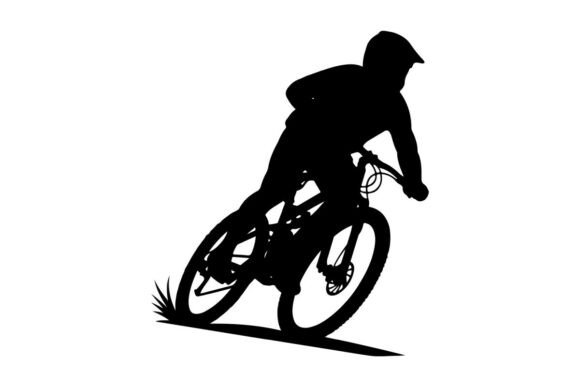
Beyond the physical act of riding, the visual representation of mountain biking holds significant power in marketing and creative projects. The image of a cyclist in mid-air or leaning into a sharp turn captures the essence of adventure. This is where high-quality graphic resources become invaluable. Using a premium vector silhouette clip art allows designers to incorporate this dynamic energy into their work without the clutter of photographic detail. Silhouettes strip away distractions, focusing the viewer’s attention on the form, motion, and emotion of the subject.
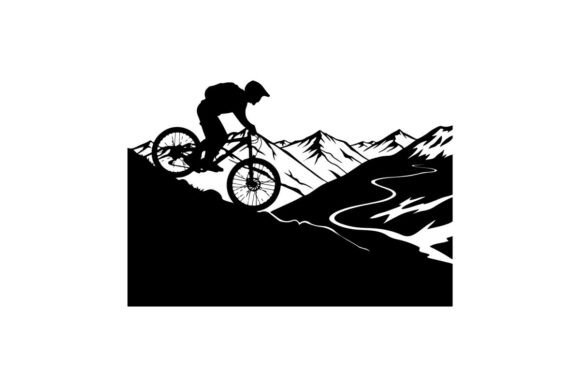
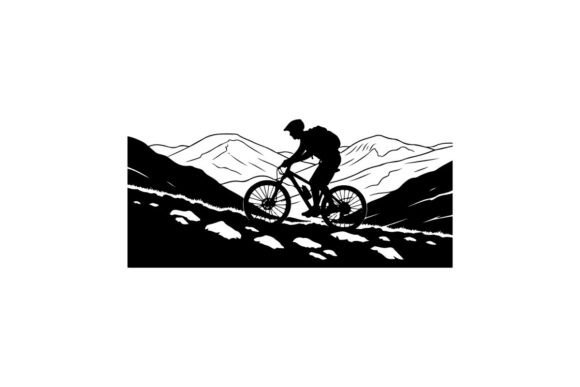
A well-crafted silhouette of a cyclist mountain biking on rugged trail terrain offers a clean, flexible design element that can be scaled infinitely without loss of quality. This vector structure ensures crisp edges and smooth curves, whether the image is used on a small business card or a large billboard. For creators, this versatility is crucial. It means the same asset can be adapted for various mediums, from digital social media posts to printed merchandise like t-shirts and mugs.
The aesthetic appeal of silhouettes lies in their simplicity. They provide a modern, timeless look that blends seamlessly with diverse design themes. Whether the project involves a rugged outdoor brand identity or a sleek, minimalist website header, the silhouette format offers a polished appearance. It avoids the dated feel of overly complex illustrations while retaining enough detail to convey action and intensity. This balance makes it an ideal choice for professionals seeking to elevate their visual communication.
Applications Across Industries and Creative Fields
The utility of mountain biking imagery extends far beyond the sports industry. Educators can use these visuals to illustrate concepts in physics, such as force, momentum, and friction. By showing a cyclist navigating a steep incline, teachers can visually demonstrate how gravity and applied force interact. Similarly, health and wellness professionals might use these images to promote active lifestyles, emphasizing the cardiovascular and mental health benefits of outdoor exercise.
- Branding and Identity: Outdoor companies use rugged cyclist imagery to convey durability and adventure.
- Event Promotion: Race organizers utilize dynamic silhouettes to create eye-catching posters and digital ads.
- Web Design: Developers integrate scalable vector graphics to enhance user interface elements without slowing down load times.
- Merchandise Creation: Print-on-demand businesses leverage clean designs for apparel and accessories.
For business owners, incorporating such imagery into their marketing materials can help establish an emotional connection with their target audience. The sight of a cyclist conquering a difficult trail evokes feelings of achievement and freedom. By associating their brand with these positive emotions, companies can build stronger loyalty and engagement. Moreover, using high-quality, professionally designed assets ensures that the brand appears credible and trustworthy, reinforcing the principles of E-E-A-T (Experience, Expertise, Authoritativeness, and Trustworthiness) in digital content.
Enhancing Digital Content with Vector Assets
In the digital age, the performance of visual assets is just as important as their aesthetic quality. Large, uncompressed images can slow down websites, negatively impacting user experience and search engine rankings. Vector graphics, however, are lightweight and resolution-independent. A premium vector silhouette of a mountain biker can be resized and manipulated without increasing file size significantly. This efficiency is vital for web developers and digital marketers who need to optimize page load speeds while maintaining visual appeal.
Additionally, vector files are easy to edit. Designers can change colors, adjust shapes, or combine elements to create unique compositions. This flexibility allows for greater creativity and customization. For instance, a designer might alter the angle of the cyclist or add background elements to suit a specific campaign theme. The ability to tweak these details ensures that the final product aligns perfectly with the project’s goals and brand guidelines.
When selecting clip art for professional use, it is essential to choose resources that offer clean outlines and balanced shapes. Poorly designed vectors may have jagged edges or unnecessary anchor points, making them difficult to work with. High-quality assets, crafted with attention to detail, provide a smooth editing experience and reliable performance across various software platforms. This reliability saves time and reduces frustration, allowing creators to focus on the broader aspects of their projects.
The Psychological Impact of Adventure Imagery
Why does the image of a cyclist mountain biking on rugged trail resonate so deeply with viewers? Psychologically, it taps into universal desires for exploration and mastery. Humans are naturally drawn to narratives of overcoming obstacles. The visual of a rider tackling a challenging path symbolizes personal growth and resilience. For consumers, seeing this imagery can inspire them to pursue their own goals, whether related to fitness, career, or personal development.
For educators and researchers, this psychological aspect offers interesting avenues for study. How do visual cues influence motivation? Can exposure to adventure sports imagery increase willingness to engage in physical activity? These questions highlight the broader societal impact of visual media. By understanding the underlying psychology, creators can craft more effective and meaningful content that not only informs but also inspires.
Moreover, the inclusivity of silhouette art allows for broader representation. Since silhouettes lack specific facial features or detailed clothing, they can represent a diverse range of individuals. This ambiguity enables viewers to project themselves into the image, fostering a sense of identification and belonging. For brands aiming to reach a wide audience, this inclusive approach can be particularly effective in building community and engagement.
Integrating Nature and Technology in Design
The juxtaposition of human-made technology (the bike) and natural elements (the trail) creates a compelling visual narrative. This theme is increasingly relevant in discussions about sustainability and our relationship with the environment. Designers can use this contrast to highlight the importance of preserving natural spaces while enjoying outdoor activities. By featuring a cyclist mountain biking on rugged trail landscapes, content creators can subtly advocate for environmental stewardship and responsible recreation.
This integration also reflects current design trends that favor organic shapes and natural motifs. Clean, modern silhouettes complement these trends by providing a structured counterpoint to the irregularity of nature. The result is a harmonious composition that feels both contemporary and grounded. For businesses in the eco-friendly sector, such imagery can reinforce their commitment to sustainability and outdoor appreciation.
Ultimately, the value of high-quality visual assets lies in their ability to communicate complex ideas quickly and effectively. A single, well-designed silhouette can convey movement, energy, and context without the need for extensive text. In a world saturated with information, this clarity is a significant advantage. Whether used in educational materials, marketing campaigns, or artistic projects, these elements enhance the overall impact and readability of the content.
As we continue to explore the intersections of sport, design, and technology, the humble silhouette remains a powerful tool. It bridges the gap between the raw excitement of mountain biking and the refined needs of professional design. By leveraging these resources, creators can produce work that is not only visually striking but also meaningful and engaging. The journey of the cyclist on the rugged trail serves as a reminder that beauty and challenge often go hand in hand, and capturing that essence in design can inspire others to embark on their own creative journeys.