Sewing Collage Junk Journal Pages: A Strategic Asset for Creative Branding and Design
In the landscape of digital content creation and physical product design, aesthetic consistency is not merely a decorative choice; it is a fundamental component of brand identity and user engagement. For creators, educators, and small business owners operating within the crafting, lifestyle, or vintage niches, the visual language you employ communicates value before a single word is read. This is where the strategic implementation of Sewing Collage Junk Journal Pages becomes a critical decision point. These are not simply background images; they are curated visual assets designed to evoke nostalgia, craftsmanship, and tactile warmth in an increasingly digital world.
Understanding how to leverage this specific collection requires moving beyond the surface-level appreciation of pretty pictures. It demands a clear understanding of your audience’s psychological triggers and your own operational goals. Whether you are designing printable planners, creating social media content for a textile business, or assembling high-end junk journals for sale, the right visual foundation can significantly reduce production time while elevating perceived quality.
The Strategic Value of Nostalgic Aesthetics
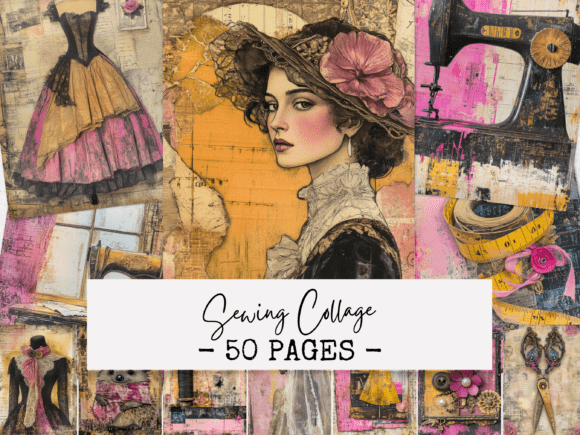
The modern consumer is often overwhelmed by sleek, minimalist, and hyper-digital designs. In response, there is a growing market demand for authenticity and "handcrafted" feelings, even when the final product is digitally produced. The Sewing Collage Junk Journal Pages pack addresses this demand by offering richly layered compositions that mimic the texture of aged paper, lace, and fabric. This aesthetic serves a functional purpose: it slows down the viewer. The intricate details of antique sewing machines, measuring tapes, and distressed textures invite closer inspection, increasing dwell time on digital platforms and enhancing the tactile experience of printed materials.
From a branding perspective, utilizing these pages signals attention to detail. When a customer encounters a planner insert or a greeting card featuring these vintage dressmaking elements, they subconsciously associate the product with care, tradition, and quality. This association is vital for entrepreneurs looking to differentiate themselves in saturated markets such as print-on-demand (POD) or Etsy-style handmade goods. The warm color palette—blending soft pinks, gold accents, and neutrals—creates an emotional connection that sterile, modern designs often fail to achieve.
Optimizing Workflow and Production Efficiency
One of the most practical arguments for integrating pre-designed digital assets like Sewing Collage Junk Journal Pages into your workflow is efficiency. Creating high-quality collage art from scratch is time-intensive. It requires sourcing public domain images, cleaning them up, adjusting color balances, and layering them cohesively. For a freelancer or small business owner, time is a finite resource that must be allocated to high-value activities such as marketing, customer service, and product development.
By utilizing a pack of 50 high-resolution JPG files at 300 DPI, you eliminate the initial research and composition phase. These files are ready for immediate use, allowing you to focus on customization and application. For instance, if you are producing a series of sewing-themed tutorial guides, you can use these pages as consistent backgrounds across all documents. This ensures brand coherence without the need to hire a graphic designer for every new project. The seamless creative use across digital and print projects means you can maintain a unified visual identity whether you are posting on Instagram or shipping physical products.
Practical Applications Across Industries
To maximize the return on investment for this digital collection, it is essential to map the assets to specific use cases. Here are several strategic applications:
- Educational Resources: Educators teaching history, fashion design, or home economics can use these pages to create engaging handouts. The visual context of vintage gowns and dress forms provides immediate thematic relevance, aiding in student retention and interest.
- Print-on-Demand Products: For POD sellers, uniqueness is key. Using these collage pages as bases for journal covers, notebook interiors, or wall art allows for rapid product iteration. You can overlay text or additional graphics to create hundreds of unique SKUs from a single asset pack.
- Digital Planning and Stationery: The rise of digital planning on tablets has created a demand for aesthetically pleasing templates. These pages serve as excellent bases for digital stickers, dashboard backgrounds, or monthly covers, appealing to users who value a feminine, nostalgic interface.
- Marketing Materials: Small businesses in the textile or craft supply sector can use these images in their email newsletters and social media posts. They provide a cohesive look that reinforces the brand’s niche authority without requiring custom photography for every campaign.
Risks of Unintentional Design
While the benefits are significant, there are risks associated with using pre-made assets without a clear strategy. The primary danger is genericism. If you use the Sewing Collage Junk Journal Pages exactly as they are, without any modification or contextual integration, your work may blend in with competitors using the same resources. To mitigate this, you must approach these assets as a foundation, not a final product.
Consider the following decision-making framework before deployment:
- Contextual Relevance: Does the vintage sewing theme align with your core message? Using these pages for a tech startup’s annual report would likely create cognitive dissonance. Ensure the aesthetic supports, rather than distracts from, your content.
- Customization Level: How will you make these pages your own? Adding your typography, logo, or complementary color accents is crucial. The goal is to use the texture and mood of the collage while maintaining your unique brand voice.
- Target Audience Alignment: Verify that your specific demographic responds to nostalgic, handcrafted aesthetics. While popular, this style may not resonate with audiences preferring ultra-modern or industrial designs.
Technical Considerations for Quality Output
The technical specifications of the Sewing Collage Junk Journal Pages are designed to support professional outcomes. The 300 DPI resolution is the industry standard for crisp printing. This ensures that when you produce physical items such as scrapbook papers or journal inserts, the details of the lace and fabric textures remain sharp, not pixelated. For digital use, these high-resolution files allow for scaling and cropping without significant loss of quality, providing flexibility in layout design.
However, file management is a critical operational consideration. With 50 individual files, organization is key. Establish a naming convention and folder structure that allows you to quickly locate specific themes within the pack, such as "scissors," "dress forms," or "neutral backgrounds." This small organizational step can save hours of search time during high-pressure project deadlines.
Long-Term Brand Building Through Visual Consistency
Ultimately, the decision to use Sewing Collage Junk Journal Pages should be viewed through the lens of long-term brand building. Consistency builds trust. When your audience recognizes your visual style across various touchpoints—your blog, your products, your social media—they develop a sense of familiarity and reliability. This collection offers a versatile toolkit to maintain that consistency without sacrificing creativity.
By intentionally selecting assets that align with your brand’s narrative of craftsmanship and nostalgia, you create a cohesive ecosystem. This is not just about making things look nice; it is about communicating values. The distressed textures and vintage motifs speak to durability, history, and the human touch. In a market flooded with disposable content, these values are powerful differentiators.
Before downloading or purchasing, assess your current design gaps. Do you lack cohesive backgrounds? Are you spending too much time sourcing images? If the answer is yes, then integrating this pack is a logical operational improvement. Use it to streamline your production, enhance your aesthetic appeal, and strengthen your brand’s emotional connection with your audience. The result is not just a beautiful project, but a more efficient, strategically sound creative practice.