Evaluating the Practical Value of Junk Journal Tags - Floral Melody
In the expansive world of paper crafting and mixed media art, finding digital assets that genuinely enhance a project without overwhelming the creator is a constant challenge. Many downloadable ephemera sets promise versatility but often deliver designs that are too rigid, overly saturated, or difficult to integrate with existing supplies. Junk Journal Tags - Floral Melody emerges as a thoughtful solution for crafters who prioritize cohesion and ease of use. This digital collection is not merely a assortment of random images; it is a curated toolkit designed specifically for creative journaling, collage, and paper crafting. By focusing on soft textures, gently washed colors, and interoperable design elements, this set addresses the common pain points of digital printing and physical assembly.
Design Philosophy and Aesthetic Consistency
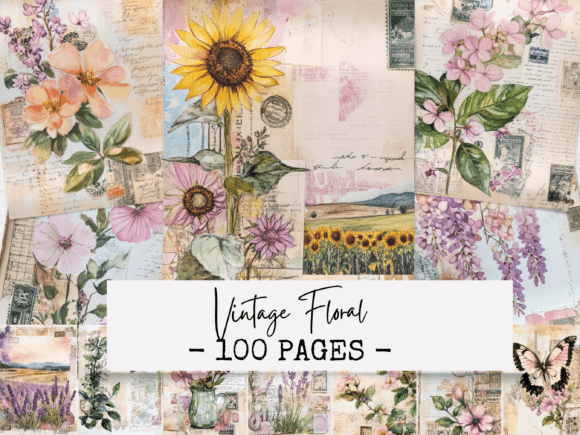
The visual identity of Junk Journal Tags - Floral Melody is rooted in a vintage-inspired aesthetic that avoids the pitfalls of looking artificially aged. Instead of relying on heavy distressing or dark, muddy tones, the designs feature soft textures and a muted color palette. This approach creates a tactile look that feels authentic rather than manufactured. For artists working in junk journals or art journals, maintaining a consistent visual language across pages is crucial for a professional finish. The gently washed colors allow these elements to serve as background layers or focal points without clashing with other materials.
One of the most significant strengths of this collection is its coordination with popular crafting ink pad color systems. This detail demonstrates a deep understanding of the end-user’s workflow. Crafters often own specific brands of inks, cardstocks, and stamps. When digital printables are designed in isolation, they can look out of place when combined with physical media. By aligning the digital color profile with standard industry inks, Junk Journal Tags - Floral Melody ensures that printed tags, labels, and stamps blend seamlessly with hand-stamped images and dyed papers. This interoperability reduces the time spent trying to "force" mismatched elements to work together.
Component Breakdown and Versatility
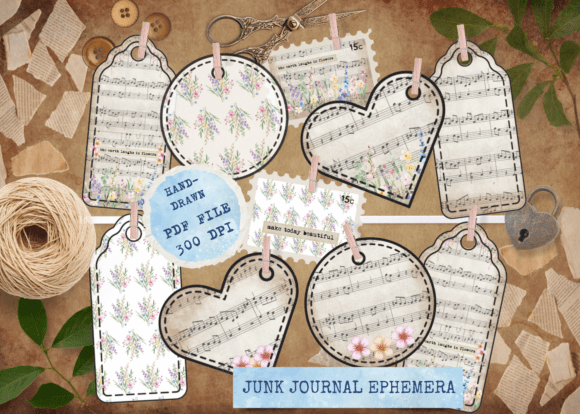
The utility of any ephemera set lies in the variety and functionality of its components. This collection includes a diverse range of decorative elements, each serving a distinct purpose in layout construction:
- Printable Tags: These form the backbone of many junk journal spreads, offering space for writing, ticket stubs, or small mementos. Their shapes and sizes are varied to prevent repetitive visual patterns.
- Faux Postage Stamps: Ideal for adding historical context or thematic depth, these elements introduce a narrative layer to the page.
- Circular Labels: Perfect for highlighting dates, titles, or small quotes, these provide geometric contrast to the typically rectangular format of journal pages.
- Washi Tape Strips: Digital washi tape allows for precise placement without the bulk or adhesive issues of physical tape, enabling clean, layered borders.
The ability to mix and match these elements easily is a core feature. Users are not constrained to using one type of element per page. Instead, they can layer a circular label over a tag, anchor it with a faux stamp, and frame the composition with digital washi tape. This flexibility supports the creation of cohesive layouts that maintain a handmade feel, even though the base elements are digitally produced.
Technical Quality and Printing Considerations
As a digital download, the value of Junk Journal Tags - Floral Melody is heavily dependent on technical execution. The file is provided as a high-resolution PDF at 300 DPI (dots per inch). This resolution is the industry standard for high-quality printing, ensuring that edges remain crisp and details do not pixelate when scaled to typical journal sizes. For professionals and serious hobbyists, this level of quality is non-negotiable.
However, the transition from screen to paper introduces variables that users must manage. The product description rightly notes that colors may vary slightly depending on printer and paper choice. This is an inherent limitation of home printing. To mitigate this, users are advised to print at 100% actual size with scaling turned off. Using the printer’s highest quality or photo setting is essential for capturing the subtle texture details that define the vintage aesthetic. Furthermore, selecting the correct paper type in printer settings—whether matte, glossy, or cardstock—can significantly impact the final appearance. For those seeking a truly authentic junk journal look, printing on textured or slightly off-white paper can enhance the vintage effect more effectively than standard bright white copy paper.
Target Audience and Practical Applications
Who benefits most from this specific collection? While it is marketed towards junk journalers, its applications extend further. Scrapbookers will find the coordinated colors useful for creating themed pages without sourcing multiple physical embellishments. Collage artists can use the elements as foundational layers before adding paint or other media. Educators and therapists utilizing art journaling for mindfulness or educational purposes may appreciate the calming, soft aesthetic which does not overstimulate.
For small business owners who create handmade journals for sale, this digital asset offers a cost-effective way to add unique, proprietary-looking details without the overhead of purchasing and storing physical inventory. Since it is a digital download, there is no physical product to ship, reducing logistical complexity. However, it requires the buyer to have access to a reliable printer and basic cutting tools. This makes it less suitable for individuals who prefer ready-to-use physical supplies, but ideal for those who enjoy the process of customization.
Limitations and Realistic Expectations
It is important to approach Junk Journal Tags - Floral Melody with realistic expectations. As a digital product, it requires time and effort to print, cut, and assemble. The "handmade feel" is achieved through the user’s interaction with the material, not automatically generated by the file. Additionally, while the color palette is coordinated with popular ink systems, monitor calibration differences mean that what appears on screen may not perfectly match the physical ink pads a user owns. A test print is always recommended before committing to a large batch.
Furthermore, the vintage style, while versatile, may not suit every artistic direction. Creators working in bold, modern, or high-contrast aesthetics might find the soft, washed colors too subtle. This collection thrives in environments where subtlety, layering, and nostalgia are valued.
Long-Term Value and Workflow Integration
The long-term value of this ephemera set lies in its reusability and adaptability. Unlike physical stickers that are used once, digital files can be printed repeatedly. If a crafter runs out of a specific tag shape, they can simply reprint it. This consistency is invaluable for maintaining a uniform look across a year-long journal or a series of projects. The PDF format ensures compatibility with most home printers and basic image viewing software, requiring no specialized design skills to utilize.
Integrating Junk Journal Tags - Floral Melody into a regular crafting workflow can streamline the creative process. By providing pre-designed, coordinated elements, it reduces decision fatigue. Crafters spend less time searching for matching embellishments and more time focusing on composition and storytelling. The mix-and-match nature encourages experimentation, allowing users to develop their unique style within a structured framework.
In conclusion, Junk Journal Tags - Floral Melody represents a well-executed digital resource for paper crafters. Its strength lies not in novelty, but in its thoughtful design, technical quality, and practical compatibility with existing crafting supplies. For those willing to engage in the print-and-cut process, it offers a reliable, aesthetically pleasing foundation for creating layered, visually interesting journal pages. It is a tool that respects the user’s time and creativity, providing the necessary components to build cohesive, professional-looking layouts with a distinct vintage charm.